Buying an apartment is a long-term decision. A buyer who wants to compare different residential complexes and choose a suitable long-term option needs to assess both the quality of the apartment and the terms of the transaction. This guide focuses on comparing not only the apartment, but the entire living environment.
This article is intended for buyers who value the courtyard, common areas, security, and future maintenance. It will help you define your requirements in advance, ask the developer the right questions, and compare options using the same criteria.
Which criteria are decisive?
To find a suitable option, it is advisable to evaluate each apartment using uniform criteria. This approach allows you to avoid being guided only by beautiful pictures or a single advantage.
- master plan of the complex
- building density and courtyard area
- entrances, elevators, and common areas
- parking and vehicle circulation
- security and access control
- maintenance model and costs
Consider each point within your daily routine. What is important for one buyer may be secondary for another. Therefore, first create a list of priorities, and only then compare projects and apartments.
Step-by-step selection process
A consistent process reduces the likelihood of a hasty booking and the emergence of additional costs later. A practical sequence could be as follows:
- Compare the locations of the complexes
- Study not only the apartment, but also the overall project
- Assess daily routes and infrastructure
- Clarify the planned maintenance rules
- Choose an apartment with the full life of the complex in mind
If information is incomplete at any stage, do not proceed to the next step just because the offer is presented for a limited time. Essential terms must be understandable and verifiable before payment is made.
What to check with the developer
The purpose of meeting with a sales specialist is not only to see an available apartment but also to get a complete picture of the transaction. Ask them to provide relevant documentation or contractual wording in addition to verbal answers.
- the design description of the courtyard and common areas
- the parking terms
- the sequence of building handovers
- the principle used to calculate the maintenance fee
- the final condition of the common areas
The contract must identify the apartment, the parties, the price, payment deadlines, delivery terms, and liability. In legal or financial matters, it is advisable to seek advice from a relevant independent professional.
Consider the price within the total budget
The declared value of the apartment is usually only one part of the decision. The total budget may include costs for processing, financing, appraisal, insurance, renovation, furnishing, parking, and maintenance. The specific composition should be clarified for the given project and transaction.
It is useful to prepare three scenarios: a baseline, a more expensive one, and a conservative one. If the choice is only feasible under the best-case scenario, the financial burden may be too high. A reserve fund gives the buyer greater flexibility.
Visit and practical evaluation
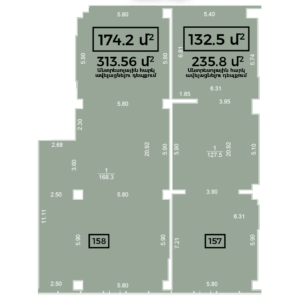
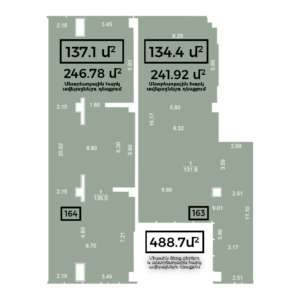
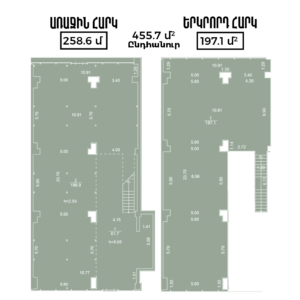
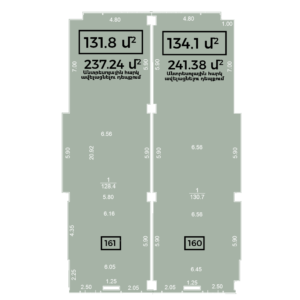
Even a detailed floor plan does not convey the full feel of the space. If possible, visit the project or a finished apartment; evaluate the entrance, surroundings, light, noise, and common areas.
During the visit, take photos or record questions, but follow the safety rules set by the developer. Then compare what you saw with the sales materials and the contract. Discrepancies should be clarified before the decision.
How to compare final options
When two or three apartments remain in the selection, comparing them by memory is difficult. Create a simple evaluation card and give a weight of importance to each criterion. For example, for a family, location may be more important than the floor, while for an investment purchase, the total budget and future demand may become primary.
Record facts for each option in the same way, not just impressions. Separately note confirmed information, questions requiring clarification from the developer, and your personal assessment. This separation allows you not to confuse a promotional promise with a contractually fixed obligation.
- Master plan of the complex — record the actual information, its source, and your assessment
- Building density and courtyard area — record the actual information, its source, and your assessment
- Entrances, elevators, and common areas — record the actual information, its source, and your assessment
- Parking and vehicle circulation — record the actual information, its source, and your assessment
- Security and access control — record the actual information, its source, and your assessment
Finally, compare not only the total scores but also the points where compromise is unacceptable. If an apartment does not meet one of the mandatory requirements, a high score in other criteria does not always compensate for that deficiency.
Common mistakes to avoid
Some buyers make a decision based on the first emotional impression or only on the amount of the monthly payment. However, an apartment is a long-term asset, and a mistake in selection can later lead to an inconvenient layout, higher costs, or difficulty in selling.
- comparing only the price per square meter while ignoring the total value,
- considering verbal promises as contractual obligations,
- not checking the actual direction of windows, the view, and sources of noise,
- spending all savings on the down payment or the first installment,
- not calculating the costs of renovation, furnishing, and subsequent maintenance,
- rushing to book without reading the documents and refund terms.
In the case of new buildings, compare the apartment, the building, and the entire project separately. A good floor plan does not compensate for an inconvenient location or uncertain maintenance terms, and an attractive overall project does not eliminate the lighting and positioning defects of a specific apartment.
A good decision does not necessarily have to be the cheapest or the largest option. It must correspond to your goal, have clear documentation, and fit into a budget that does not disrupt the family’s financial stability.
Frequently Asked Questions
1. How does a residential complex differ from a standalone building? A complex usually includes interconnected buildings and common areas, but their actual composition should be verified for the specific project.
2. Why is courtyard organization important? The courtyard affects children’s safety, recreation, noise, and vehicle movement. Study the balance between pedestrian and vehicle zones.
3. Is parking included in the apartment price? It depends on the project terms. Clarify the parking type, availability, price, and form of ownership or use.
4. How should you assess the common areas? Consider the size of the entrances, number of elevators, corridor lighting, accessibility, and planned finishes.
5. What should you know about maintenance? Find out who will manage the building, which services will be included, and how the monthly fee will be calculated.
Get a consultation from CBS Construction
If you are interested in apartments in new buildings from a developer, contact the sales specialists at CBS Construction. Provide your budget, preferred floor area, number of rooms, and purchase timeframe to receive an up-to-date list of suitable options.
During the consultation, ask for floor plans, a full description of prices and payment terms, construction or delivery deadlines, and the draft contract. Make the final decision only by comparing the facts.